
Digital Asset Inventory at a Glance
A digital asset inventory replaces manual Excel spreadsheets and paper-based inventory processes with a centralized digital solution. Companies record their assets using QR codes, barcodes or RFID technology and manage all inventory data in centralized software.
The Key Benefits
- up to 80% time savings during inventory counts
- fewer data capture errors through digital processes
- an up-to-date overview of all assets at any time
- greater transparency and traceability
- easy scalability as the asset base grows
Companies with multiple locations or a large number of assets and equipment benefit in particular from a digital asset inventory.
What Is a Digital Asset Inventory?
With a digital asset inventory, all company assets are recorded electronically, uniquely labelled and managed centrally. Instead of handwritten lists or Excel files, modern technologies and mobile devices are used.
The most common identification technologies include:
- QR codes for fast and cost-effective labelling
- barcodes as a proven standard solution
- RFID tags, which can even capture assets without direct contact
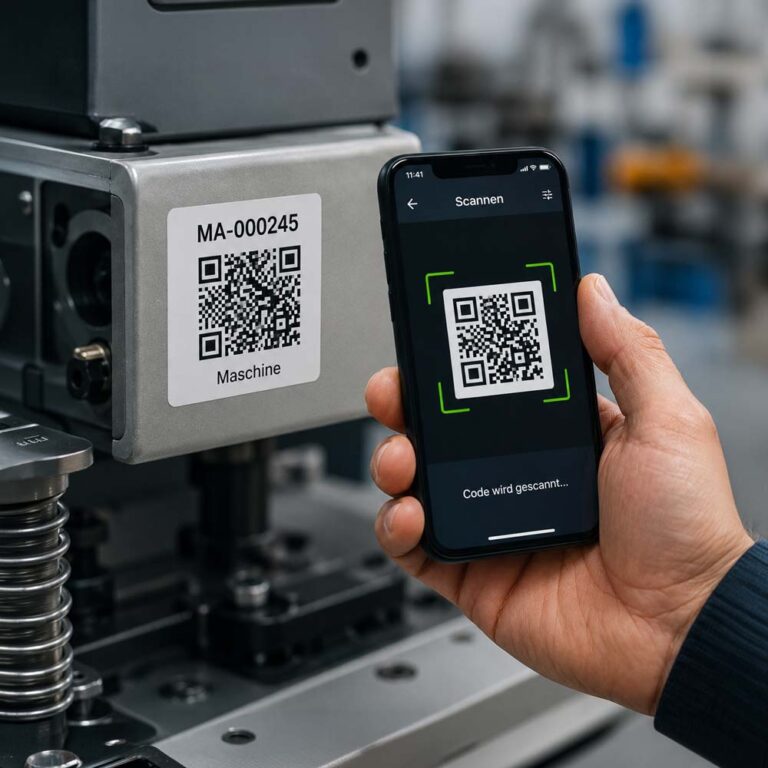
Employees scan the labels with a smartphone or tablet and immediately access all relevant information, such as location, responsible person, purchase date or maintenance status.
This provides an up-to-date and transparent asset register at all times.
Why Do Excel Spreadsheets Reach Their Limits in Inventory Processes?
Many companies still manage their inventory using Excel spreadsheets. This approach often works only while the number of assets remains manageable.
As the company grows, however, typical problems arise:
- duplicate or outdated records
- limited transparency across locations
- high manual maintenance effort
- error-prone inventory processes
- no real-time information
- time-consuming coordination between departments
These weaknesses create considerable additional effort and avoidable costs, particularly during annual inventories or when assets are relocated.
The Key Benefits of Digital Inventory Management
1. Significantly Less Time Required
Scanning QR codes or RFID tags takes only a few seconds. Manual lists are no longer required.
As a result, many companies significantly reduce the time required for their inventory counts.
2. Fewer Errors
Automated data capture prevents transcription errors, duplicate entries and overlooked assets.
All changes are saved in the system immediately.
3. Centralized Data
All information is stored in one place.
Employees can see at any time:
- where an inventory item is located
- who is responsible for it
- when maintenance was carried out
- which assets are missing or need to be replaced
4. Greater Transparency
Digital inventory management provides transparency throughout an asset’s entire lifecycle, from acquisition to disposal.
This makes it easier to plan investments and avoid unnecessary replacement purchases.
5. Scalability
While Excel spreadsheets quickly become difficult to manage as data volumes increase, professional inventory software grows easily with the company.
Which Technologies Are Used for Digital Asset Inventories?
Different identification methods can be used depending on the size and requirements of the company.
QR Codes
QR codes are cost-effective, easy to create and can be scanned with almost any smartphone. For most companies, they are an ideal starting point for digital inventory management.
Barcodes
Barcodes have been established for many years and are particularly useful when scanners or corresponding processes are already in place.
RFID
RFID technology enables multiple inventory items to be captured simultaneously without direct contact. It is particularly suitable for large inventories or companies with a very high number of assets.
How to Introduce a Digital Asset Inventory
Implementation usually follows a few clear steps.
Step 1: Prepare Existing Inventory Data
Existing Excel spreadsheets and inventory records are cleaned up and converted into a consistent structure.
Step 2: Label Assets
Each asset receives a unique QR code, barcode or RFID tag.
This allows every asset to be identified unambiguously.
Step 3: Introduce Mobile Data Capture
Employees record inventory items directly on site using a smartphone or tablet.
Changes are synchronized immediately.
Step 4: Standardize Processes
Standardized workflows ensure that inventory data remains up to date and traceable at all times.
Which Companies Benefit from a Digital Asset Inventory?
Digital inventory management benefits almost every organization, particularly when:
- multiple locations need to be managed
- many employees have access to equipment
- inventories are carried out regularly
- maintenance activities must be documented
- a large number of machines, devices or IT assets are in use
As a general rule, the larger the asset base, the greater the economic benefit of a digital solution.
Why Specialized Inventory Software Makes Sense
Professional solutions such as INVENTIRE bring together all inventory data on a centralized platform.
In addition to mobile data capture, modern systems offer features such as:
- digital asset management
- QR code and RFID support
- inventory capture via smartphone or tablet
- a complete history of all changes
- location management
- responsibilities for each asset
- analyses and reports
- easy collaboration between multiple employees
This not only makes inventory counts faster, but also ensures permanent traceability and audit-ready documentation.
Conclusion
Digital asset inventory is increasingly becoming the standard for modern business administration.
It reduces manual effort, minimizes sources of error and provides transparency across all assets at all times. Companies benefit from more efficient processes, better data quality and significantly easier future inventory counts.
By digitizing inventory management for the long term, companies also lay the foundation for professional asset management and create the conditions for further growth.
FAQs on RFID, QR Codes & Digital Asset Inventory
Would you like to learn more about the right solution for your company? Feel free to contact us via the contact form.
What Is a Digital Asset Inventory?
A digital asset inventory records and manages all company assets electronically using QR codes, barcodes or RFID technology. All inventory data is stored centrally in one software solution.
What Are the Benefits of Digital Inventory Management?
The main benefits include time savings, fewer errors, up-to-date inventory data, transparent processes and significantly easier inventory counts.
Which Is Better: QR Codes or RFID?
QR codes are ideal for most companies because they are cost-effective and easy to implement. RFID offers advantages for very large inventories or when multiple items need to be captured simultaneously.
Can a Digital Inventory Replace Excel?
Yes. Modern inventory software can fully replace Excel and also offers features such as mobile data capture, automated documentation, change histories, responsibilities and reporting.
Which Companies Benefit Most?
Companies with large amounts of equipment, multiple locations or regularly scheduled inventory counts benefit in particular from a digital asset inventory.